
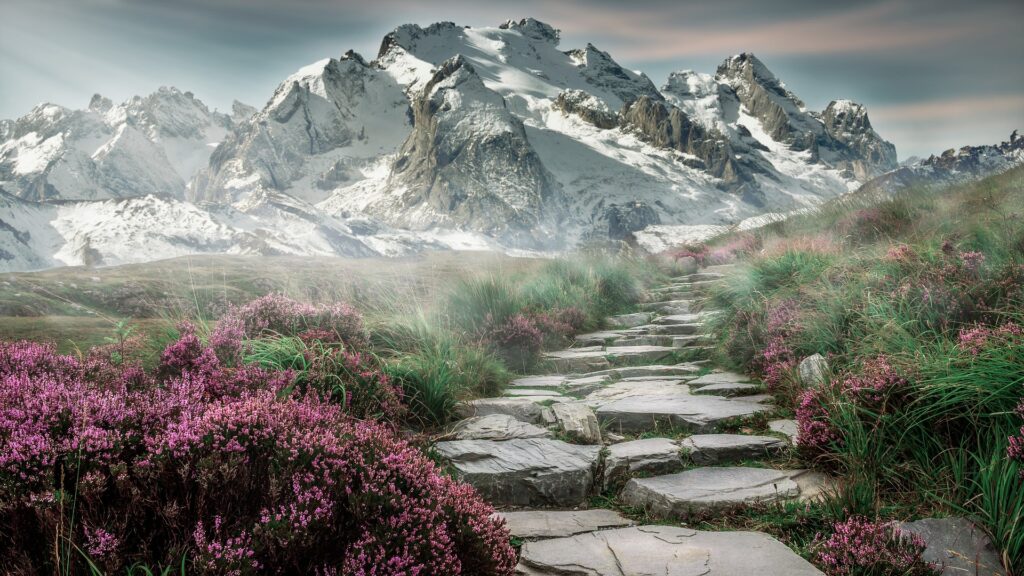
Trail: How Nature, Steps, and the Right Gear Create Space for Peace
Trail isn’t just a sport. It isn’t just walking or running through the forest. It’s a space where we calm down, test ourselves, unburden, and reconnect — with ourselves and with nature. It’s simple movement that has a surprisingly profound effect on our body, nervous system, and mental clarity.
The moment you step onto the trail, something inside you flips. The pace of everyday life dissolves, thoughts loosen, and the body starts following a rhythm far more natural than the noise of the modern world. That’s why trail running or trail walking is one of the most accessible and effective ways to reduce stress, build stability, and raise inner energy.
In this article, I combine personal experience, scientific insights, and practical tips — for those already at home on forest paths and for those who are just considering stepping into this world of authenticity, peace, and new steps.
Why Does Trail Calm Us So Quickly?
At first glance it looks like a physical activity, but trail is really a blend of movement, psychological release, and natural meditation. Within minutes of walking or running in nature, many people feel a “switch” that turns on a sense of inner peace.
- Nature Rebalances the Nervous System Countless studies show that forest environments lower cortisol levels, calm the sympathetic nervous system, and increase parasympathetic activity — the part responsible for recovery, rest, and feeling safe. The colours, natural sounds, and scents of pine, leaves, and earth act as a subtle yet incredibly effective natural therapy.
- Rhythmic Movement Quiets the Mind Trail running and walking are built on rhythm: repeating steps, steady breathing, natural arm swing. This rhythm creates a state similar to moving meditation. The mind settles, thoughts soften and become less intrusive.
- The Body Works, the Head Rests As soon as your heart rate rises shortly after starting, the brain shifts into a mode that reduces stress-thinking. The focus moves to the body, breathing, and terrain — and that spontaneously releases mental pressure.
- The Feeling of Authentic Progress On trail, results don’t matter — feeling does. When you conquer the first hill, feel the stability of your stride, or hear your breathing again… a small, quiet victory happens. That feeling builds confidence and inner strength.
Uphills: Gentle Teachers of Perseverance
Uphills are one of the most characteristic elements of trail. Some short and playful, others long and demanding. Yet they all serve the same purpose: they teach perseverance, patience, and trust in our own abilities.
When the climb begins, the body reacts instinctively. Breathing deepens, stride changes, heart rate rises. In that moment something special happens: focus narrows to the here and now. There’s no room for thoughts about the past or future — only the next step exists.
Uphills teach us:
- that we can stop and then continue,
- that pace is adaptable and personal,
- that the next step matters more than the entire summit,
- that resilience is built slowly, naturally, and without forcing ourselves.
Reaching the top — even a small one — brings one of the purest feelings of satisfaction, not because of the achievement itself, but because of who we became along the way.
Downhills: Playfulness That Sets You Free
If uphills are teachers of perseverance, downhills are teachers of joy. On a descent, something often missing in adult daily life returns — a sense of lightness, playfulness, and relaxed freedom.
As the terrain drops:
- stride becomes more dynamic,
- the body relaxes,
- movement flows more naturally,
- the wind rushes louder,
- and suddenly we feel something almost forgotten — childlike joy of motion.
Downhills teach us:
- trust in the terrain,
- trust in our own stability,
- a sense of flow,
- accepting the speed of life without trying to control it.
Mid-Trail: The Moment of Perfect Presence
Every trail has a moment when everything aligns. Distance no longer matters. Pace stabilises. The body remembers what it feels like to move without pressure.
That’s when perfect presence arrives:
- you catch the scent of the forest,
- you hear rustling leaves, birds, or your own footsteps,
- you feel a gentle silence that isn’t empty but soothing,
- you notice breathing slowly embracing you,
- tension you didn’t even know you carried melts away.
This is moving meditation — simple, accessible, effective. And exactly why so many people keep coming back to the trail.
Why Good Gear Matters (Even Though Trail Can Be Completely Minimal)
Trail is inherently very accessible. You truly don’t need much for the first steps. But a few pieces of proper gear can make the experience safer, more comfortable, and more enjoyable — especially if the trail becomes your regular companion.
- Trail Shoes – The Foundation of Stability
- Breathable, Quick-Drying Clothing
- Water – Always
- Trail Poles (very useful on steep climbs, long distances, downhills, and for beginners)
- Lightweight Wind Jacket or Anorak
- Small “Emergency Kit” (handkerchief, snack, phone, hair tie, mini first-aid)
How to Start If You’re Just Beginning
The beginning of a trail journey is one of the most beautiful things. No rush, no proof, no measuring. Just go. And listen to yourself.
- Choose a place that attracts you
- Start with walking
- Don’t overdo the distance (45–75 minutes is perfect to start)
- Listen to your body
- Enjoy nature — at least a few minutes without music
Why You Feel Better When You Get Home
After a trail almost everyone feels lighter, steadier, more present. There are very concrete reasons: improved circulation, released endorphins/serotonin/dopamine, lower stress hormones, boosted confidence, sharper focus, calmer thoughts.
Trail is one of the rare activities that simultaneously strengthens the body, relieves mental pressure, and restores a sense of inner balance.
Conclusion: A Path That’s Always There for You
Perhaps the greatest beauty of trail is that it never judges. It doesn’t ask why you came. It doesn’t rate your fitness. It doesn’t compare.
The trail accepts you exactly as you are: tired, motivated, confused, or full of energy.
And when you give it something — your time, your presence, your steps — it always gives something back.
It returns peace. It returns clarity. It returns the feeling of being part of something bigger. And it gives back what we most easily lose in everyday life: the feeling that you’re breathing more freely.